ARTEMIS 2015 - Robotic Exploration Beneath the McMurdo Ice Shelf
  • Expedition Log
  • Contact

Current Monitor Recovered

9/29/2015

1 Comment

 
By Peter Kimball
John and I headed out to our field site on Sunday to remove the water current profiler from the drill hole.  The drill hole is closing faster and faster, and we were concerned that bad weather could keep us away long enough for the instrument to become frozen in.  The timing worked out well because we've now got a substantial current data set, but we're also anxious to get the current profiler reinstalled into Sunfish (where it is a critical navigation instrument) and resume Sunfish operations at the site.

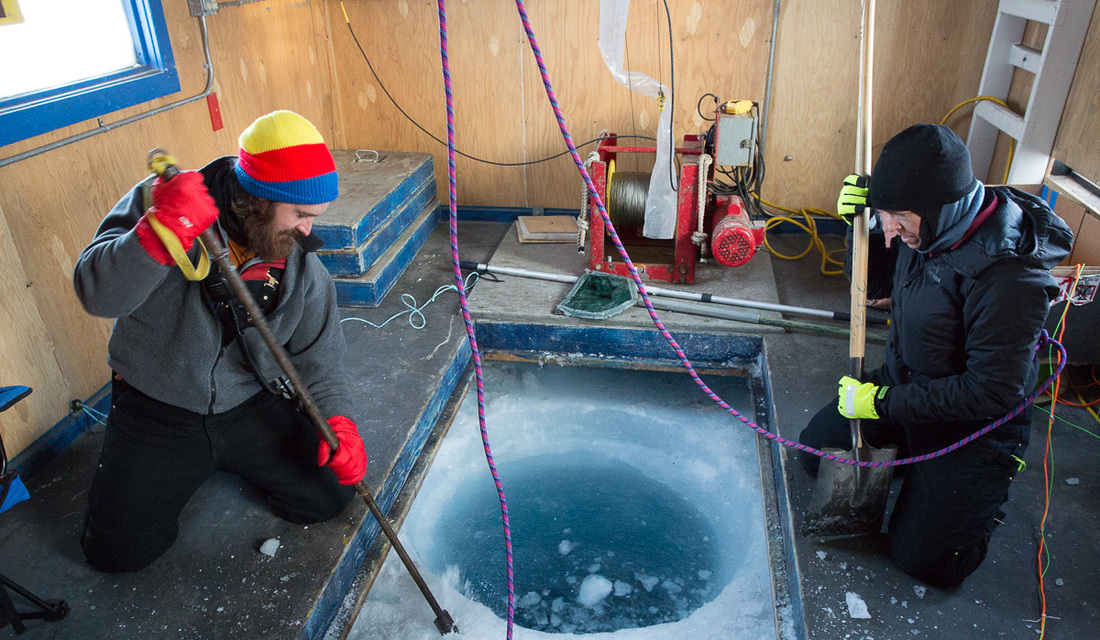
Conditions were beautiful on Sunday.  John and I saw the excellent progress the carpenters had made on the bot house in nasty weather on Saturday.  We chipped a significant amount of ice from the hole, recovered the instrument, and headed back to station.  The Mechanical Equipment Center has outfitted us with a diesel-powered heated glycol pump, called a hotsy, to help us keep the hole from freezing in.  Britney, Justin, and Josh used it to melt back about 8" of radial refreeze on Monday, making the hole ready for Sunfish operations this week.

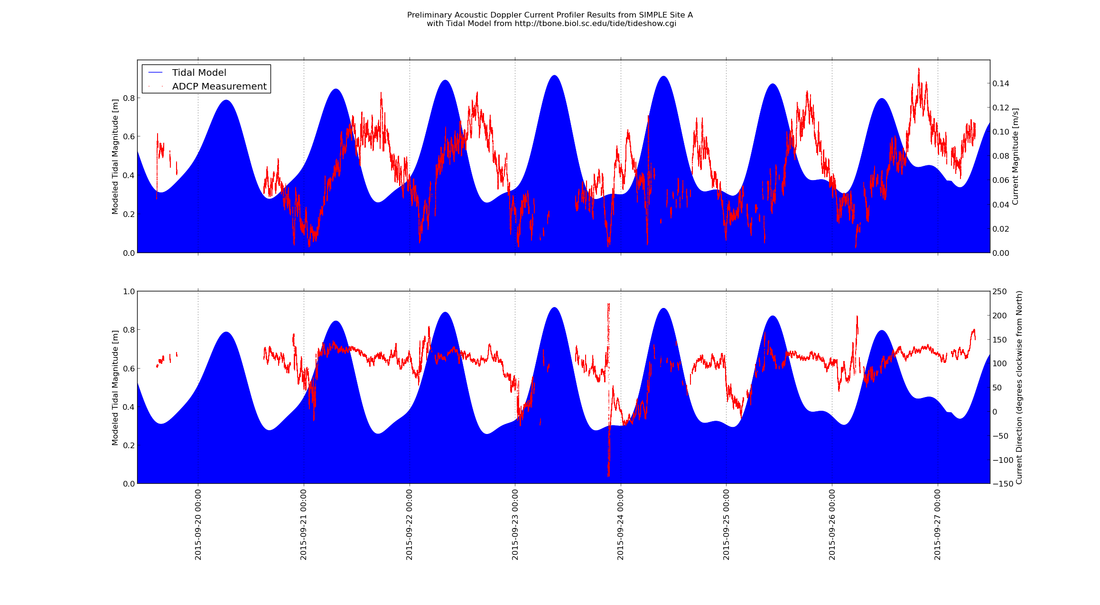
Back on station, I've plotted the water current data we collected over a tidal model.  There's quite a bit to say about the plot (below), but the most important thing is that low current velocity at our site is correlated in time with rising tidal amplitude.  Tidal amplitude is predictable, so we should be able to plan our robot dives at low-current times of day, minimizing the amount of energy the robot has to spend swimming upstream.
Picture
The water current information we collected shows that current velocity at our site is correlated in time with tidal amplitude, and that the direction of high-velocity current is fairly consistent. These are valuable pieces of information as we plan robotic dives. (figure: Peter Kimball)
1 Comment

Carpenter Heroes

9/29/2015

0 Comments

 
​By Peter Kimball
Justin and I went out to our field site on Saturday to refuel the generator powering our water current profiler.  Conditions were rather nasty out.  When we arrived at the site, we were seriously impressed by the progress the USAP carpenters had made in assembling the bot house on top of the ARTEMIS culvert.

We refueled the generator, snapped a few photos, and jumped back into our warm Pisten Bully while these heroes continued building.  "Another day at the office," they said cheefully.
0 Comments

Recreation Time... and Bill Ups The Ante

9/26/2015

4 Comments

 
By Peter Kimball
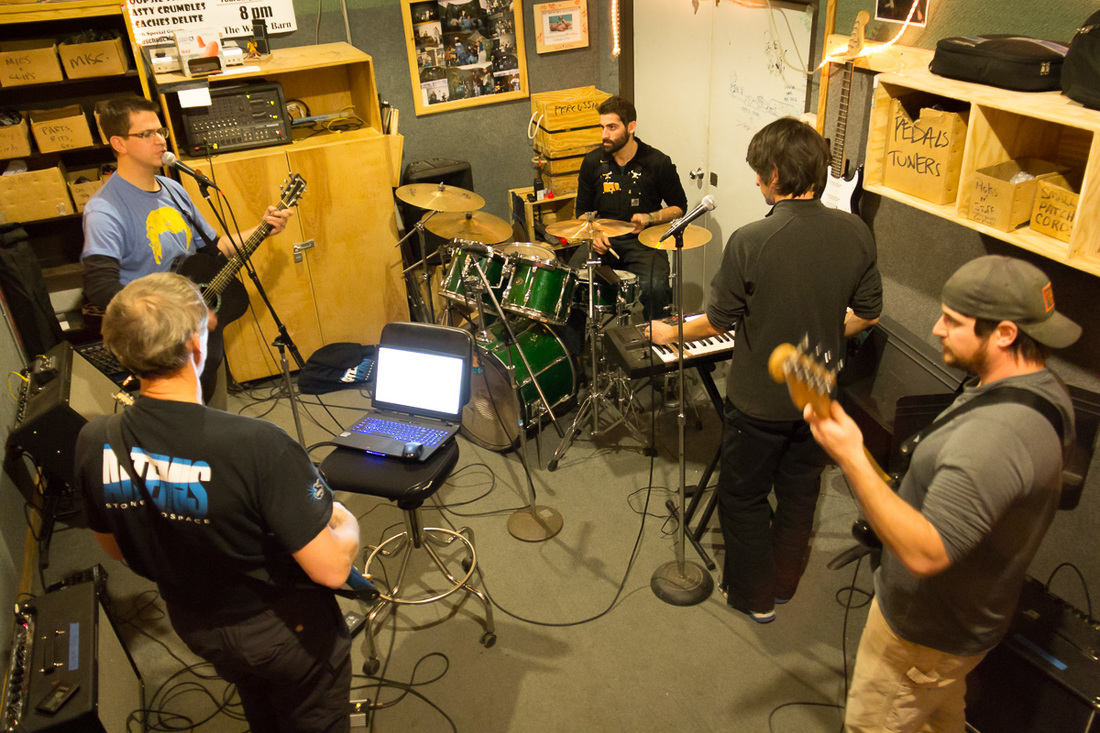
Most of the people at McMurdo are here for several months at a time.  They (we) work here, but also live here.  As such, there are some recreational options around the station to help people relax and maintain morale.  Some of us have taken a particular liking to the band room.

The band room is a happy place.  It's very well stocked with guitars, keyboards, drums, amplifiers, microphones, a P.A., and all kinds of miscellaneous music making implements.  The walls are adorned with photos and posters of great McMurdo Bands past and present.  

A few days after our third trip to the band room, Bill announced to us at lunch that he'd booked us to play live at the big end-of-winfly Capenters' Shop party.  This is a legendary annual party, attended by roughly the entire station.  

Bill's announcement was alarming because we are not particularly good at making music.  Now, two and half weeks later, the party is tomorrow!  The impending "gig" has galvanized us, and we've spent a few more evenings in the band room putting together a short set of songs.  Last night was our final band practice before the big day.  Tomorrow is going to be a very good time.
Picture
Bill, Chris, John, Justin and I belting out one of our set songs at our final "band practice" before we play at the Carpenters' Shop Party this weekend. (photo: Josh Moor)
4 Comments

Installing the ARTEMIS Culvert & Measuring Fish Hut Orientation

9/26/2015

0 Comments

 
By Peter Kimball
We have committed to our field site!  There's nothing scary enough (from a robot deployment perspective) in what we've seen on the surface or under the ice to cause us to move elsewhere.  Having committed, our first task was to install a large culvert in the ice.  We're hoping the culvert will help keep the ARTEMIS drill hole from refreezing.  We were out at the site all day on Wednesday, working with USAP carpenters and drillers to accomplish the culvert installation.

The largest auger available on station is 48" diameter.  However, the culvert is 58" outside diameter.  So, the drillers drilled a ring of 24" auger holes, and then used the 48" auger to smash up the remaining ice in the center of the hole.  We all worked with shovels to remove the large chunks of ice from the hole so that the culvert could be installed.  For the finale, the drillers hoisted one end of the culvert into the air while those on the ground aligned it with the hole.  The culvert was lowered into place using an iterative process to align it as vertically as possible.

With the culvert installed at the chosen position, the carpenters are now working to assemble our large bot house with its moon pool directly over the culvert.  This will be our access, egress, and center of operations for ARTEMIS dives.
While at the site on Wednesday, John and I used GPS to determine the orientation of our fish hut with respect to the world.  John carried a GPS receiver about 150 m from the fish hut, and we used radios to position him in alignment with the long side of the hut.  We repeated this along opposite directions from the hut, and computed the bearing between the two positions.  The long (~300 m) baseline between measurements makes the bearing computation more robust to position error than it would be with a shorter baseline, e.g. measuring positions of the corners of the hut.

We entered the GPS coordinates into our geospatial information software, and were surprised by the measured hut alignment: 90.0 degrees - within a tenth of a degree of due East-West.  It's just a coincidence, but it's fun.  We don't really care what the alignment is, just as long as we know it, so that we can interpret the water current velocity directions that we're measuring in the hut.
Picture
John stands in alignment with the long side of the fish hut in order to collect a GPS measurement used to determine the fish hut orientation with respect to North. (photo: Peter Kimball)
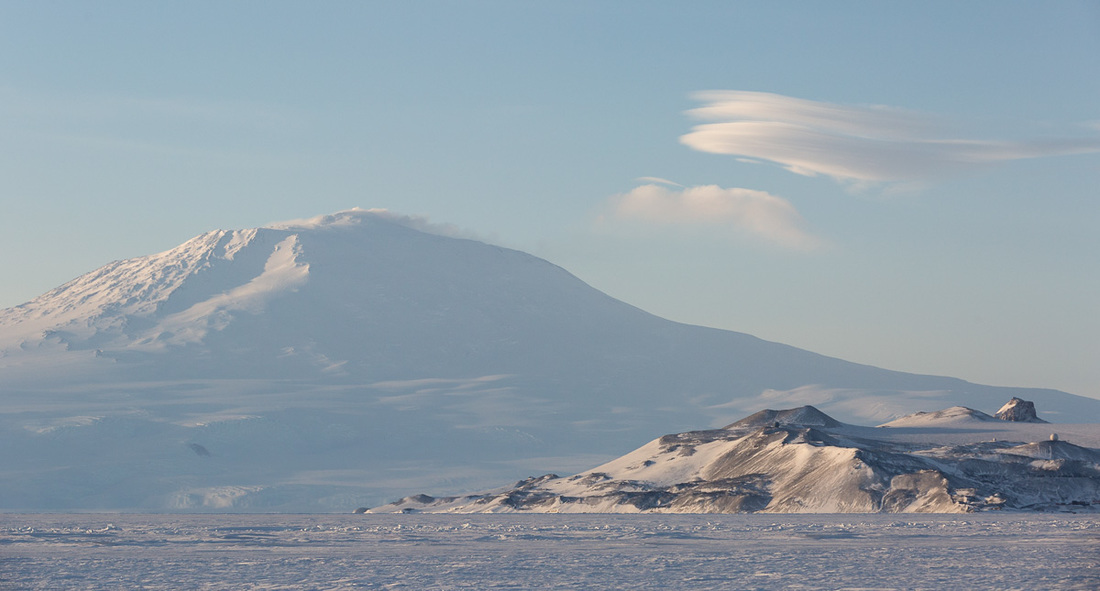
As usual, there were awesome things happening in the natural world around us.  Toward the end of the afternoon, some small lenticular clouds were forming around Mt. Erebus.  I will keep an eye out for more of these formations as the season progresses!
Picture
Lenticular clouds form above Mt. Erebus. (photo: Peter Kimball)
0 Comments

Checking on our Water Current Profiler

9/24/2015

0 Comments

 
By Peter Kimball
Picture
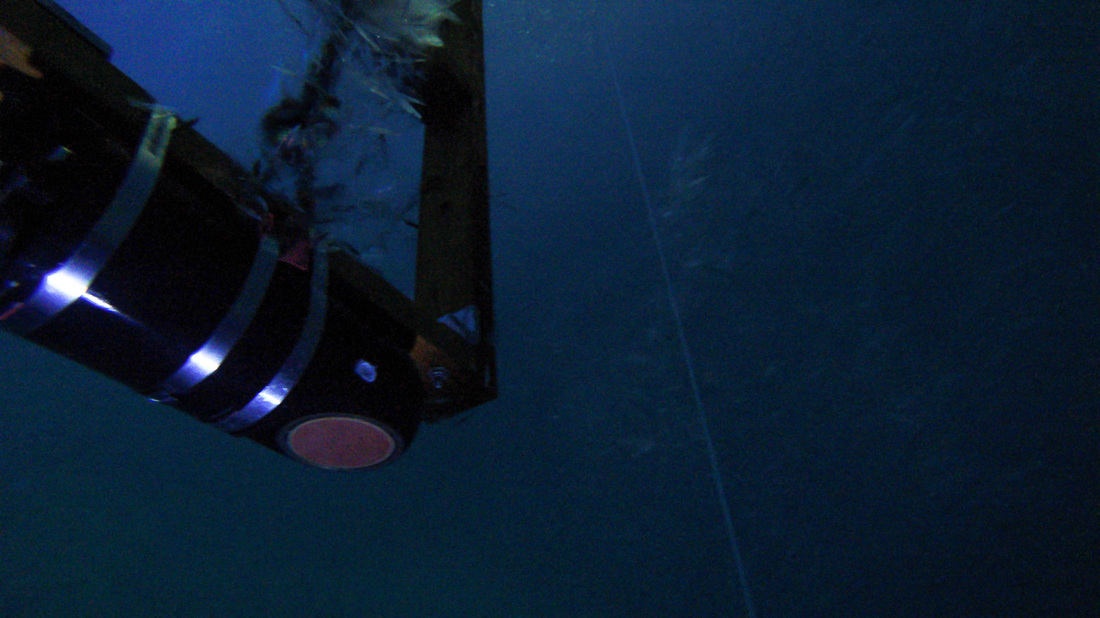
The sonar face is free of ice accumulation. (photo: Peter Kimball / Justin Lawrence)
Picture
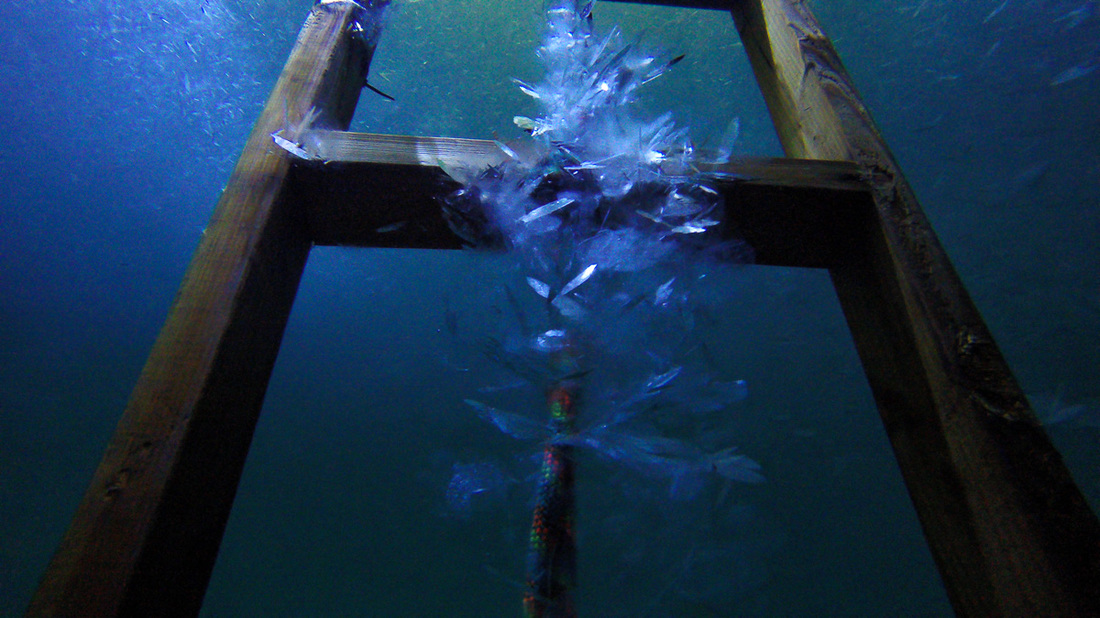
The safety rope attached to the sonar is not free of ice accumulation. (photo: Peter Kimball / Justin Lawrence)
Justin and I went out to the fish hut today to check on our water current profiling sonar.  We refueled the generator, verified that the computer is still logging data, and lowered a camera & light into the hole to check for ice accumulation on the transducer face.  With everything in good order, we headed back to town and refueled our Pisten Bully.
0 Comments

Installing a Water Current Profiler

9/20/2015

0 Comments

 
By Peter Kimball
John, Vickie, Chris, and I installed an Acoustic Doppler Current Profiler (ADCP) in the drill hole at our candidate field site on Saturday.  This instrument emits sound pulses into the water below at a known frequency and then measures the Doppler shift in returned echoes to determine the velocity (magnitude and direction) of the water currents below.  We're leaving the instrument running out at our candidate field site and traveling out to refuel the generator that's powering it whenever weather allows.  We're hoping to gain an understanding of how tidal activity drives water currents there, and thus be able to plan our robots' dives so that the robots aren't swimming upstream any more than necessary.

Bill and Josh worked up a frame to secure the instrument in a known orientation in the fish hut.  We installed the frame on Saturday after chipping out accumulated ice from the sides of the drill hole.  We ran into a problem when the cordless drill batteries wouldn't function in the cold and we Macgyvered a solution with a power supply, two multimeter leads, and a wine cork.  Worked great!
0 Comments

Crary Instrument Lab

9/18/2015

0 Comments

 
By Peter Kimball
The resources here to support science are really impressive.  We've felt very well supported by the people and equipment available.  One mundane example for which I happen to have a video is the instrument lab in the Crary building.  The other day, we were re-mounting a mapping sonar in the Sunfish robot, and I needed to tap some threads that had been corroded.  Richard, who runs the Crary instrument lab, got me set up with a tap set, compressed air, isopropyl alcohol, pipe cleaners, and oil in no time.  Tapping threads is a pretty generic task, but we've had all kinds of obscure needs met quickly and easily at McMurdo Station.
0 Comments

Condition Fun

9/18/2015

1 Comment

 
By Peter Kimball
McMurdo Station uses three weather "conditions" to define weather-related travel restrictions.  They are:

Weather Condition 3:

Unrestricted travel and activity are allowed.
  • Winds less than 48 knots, and
  • Visibility greater than or equal to ¼ mile, and
  • Wind chill temperature warmer than -75°F. 

Severe Weather Condition 2:
Restricted pedestrian traffic only between buildings is allowed. Vehicular travel is only allowed in radio equipped, enclosed vehicles, and check out with the Firehouse is required.
  • Winds 48 to 55 knots sustained for one minute, or
  • Visibility less than ¼ mile, but greater than or equal to 100 feet sustained for one minute, or
  • Wind chill -75°F to -100°F sustained for one minute. 

Severe Weather Condition 1:
Severe weather is in progress. All personnel must remain in buildings or the nearest shelter.
  • Winds greater than 55 knots sustained for one minute, or
  • Visibility less than 100 feet sustained for one minute, or
  • Wind chill greater than -100°F sustained for one minute. 

We've had Condition 1 a few times here so far.  When Condition 1 struck McMurdo tonight, we were stranded in the galley for 45 minutes (not too bad).  But, because people can end up stranded in all kinds of strange places when Condition 1 hits, there is a famous McMurdo band called "Condition Fun".  I think that's an amazing name, and I've borrowed it for the title of this post.  Check out their original song, C-17.

Here's a photo I took of the steps into the galley after a Condition 1 storm.
Ice and snow on building 155 steps.
The steps into building 155 are covered in ice and snow following a Condition 1 weather event. (photo: Peter Kimball)
1 Comment

Checking Out Our Candidate Field Site

9/18/2015

0 Comments

 
By Peter Kimball
We had a great day today deploying Sunfish at our candidate field site.  It was not a bright sunny day, but there was enough light coming through the ice for us to learn quite a bit from the imagery.  The platelet ice accumulation is certainly significant, but so far, we haven't seen anything too scary from a robot operations perspective.  Here are some stills from a GoPro I attached to Sunfish for today's dive.
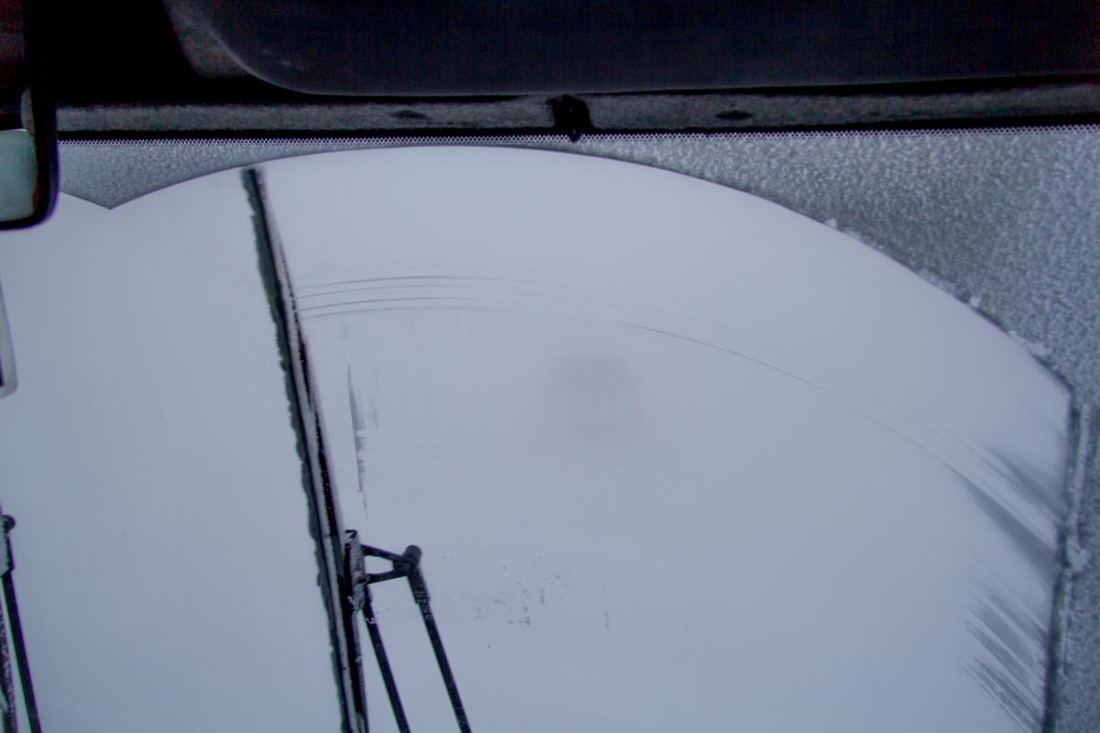
We ran the vehicle battery all the way down exploring the area around our fish hut.  We were just about to start some other experiments at the surface when the weather changed dramatically.  We had been commenting all day about how nice and not-too-cold it was outside.  Then, over the course of about 15 minutes, the wind came up to 60 mph, and visibility dropped to less than two car lengths.  We packed up our gear and drove back to station in close formation, navigating our route over the sea ice by GPS.
Picture
I drive our Pisten Bully back to McMurdo in nasty conditions. (photo: Justin Lawrence)
Picture
The other half of our team is in a Mattracks truck, barely visible ahead of us. (photo: Justin Lawrence)
0 Comments

First Sunfish Dive at our Candidate Field Site

9/18/2015

2 Comments

 
By Peter Kimball
We returned to our site on Wednesday night after our access hole was drilled that morning.  One group worked for two hours to clear platelet ice from the access hole while another group loaded Sunfish and its support gear into a vehicle and brought it out to the site.  The fish hut was cozy with a heater running and seven of us inside.  

After doing some checkouts on the vehicle systems, we deployed it down through the drill hole.  It was the middle of the night (we still have darkness for the time being), so we didn't see the glowing blue ice ceiling.  The camera view was completely black except for backscatter from the headlight, and an occasional view of the vehicle tether or the ice ceiling when we got very close.  There's still quite a bit to learn about the conditions at the field site, but we did use the opportunity to test a number of vehicle sensor systems, particularly those relating to the swift moving water currents present at the site.  Once again, we left the test happy, but with a list of tests and improvements to work on for the next dive.

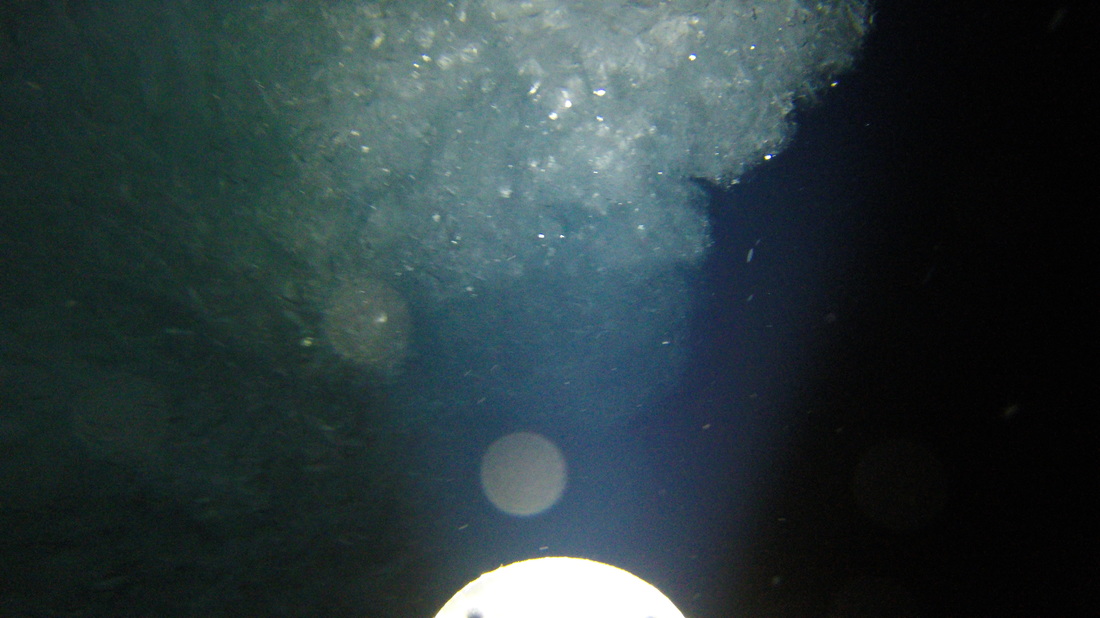
I set up a GoPro camera on Sunfish for this dive and came home with hundreds of images of headlight backscatter in dark dark water.
Picture
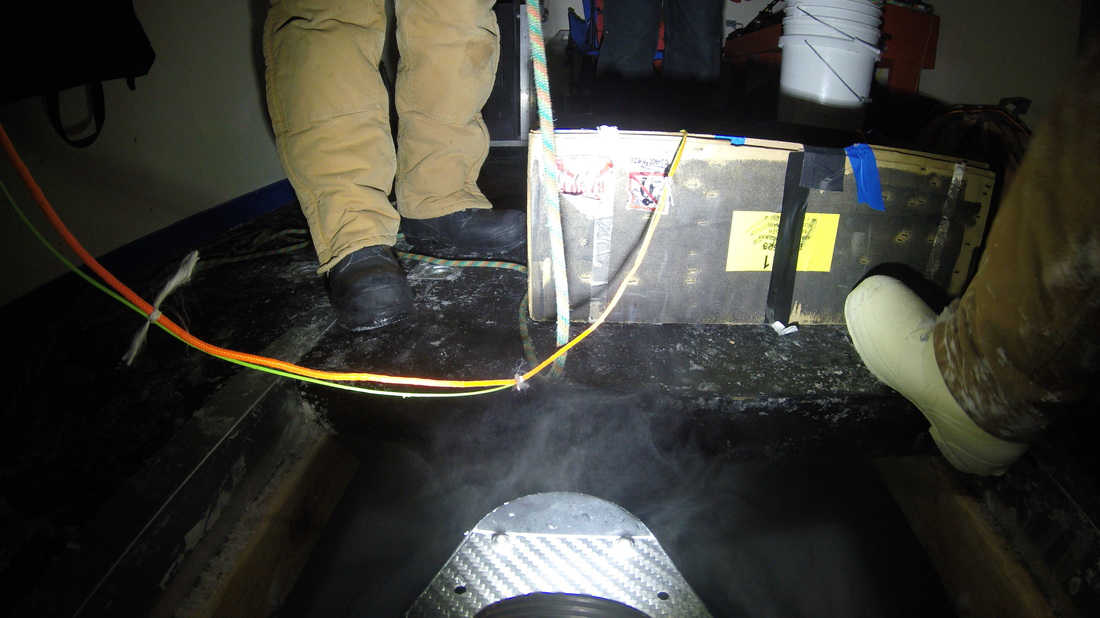
Fog forms in the Sunfish drill hole as cold air from below mixes with warm air in the hut. (photo: Sunfish/Peter Kimball)
Picture
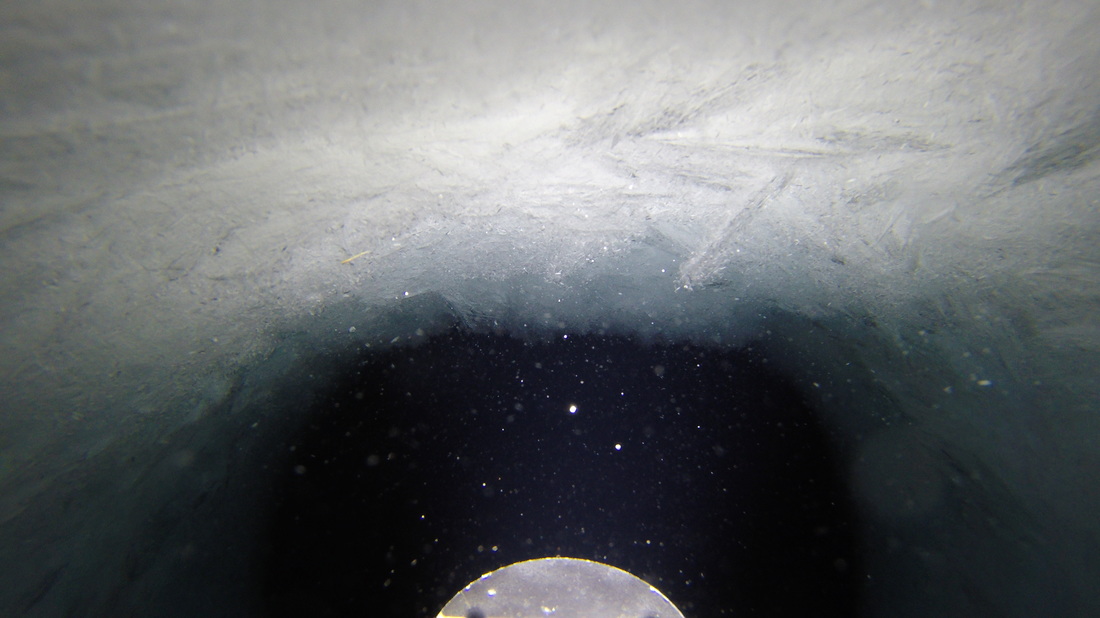
Sunfish points down the drill hole. The headlight illuminates platelet ice on the walls of the hole. (photo: Sunfish/Peter Kimball)
Picture
The Sunfish headlight illuminates platelet ice accumulation near the drill hole. (photo: Sunfish/Peter Kimball)
2 Comments

Hole Drilling at our Candidate Field Site

9/18/2015

0 Comments

 
By Peter Kimball
Great news!  After a few days of severe weather and equipment problems, we were able to head out with the drillers and get an access hole drilled through the sea ice at our candidate field site.  The drill rig is quite a site to see, with a 48" auger at the business end, and a huge tracked Cat Challenger vehicle to tow the drill over the sea ice and move snow around at the site.  Once we got to the site, it only took about half an hour for the drillers to create the access hole.  Then, they used the Challenger to tow our fish hut over the hole, and berm snow around the sides of the fish hut to insulate the bottom opening.

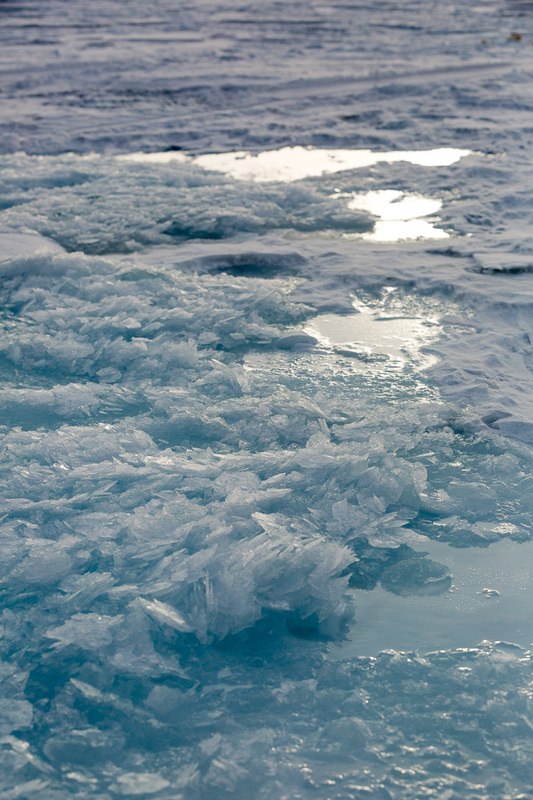
We will be able to drop the qualifier, "candidate" if we can determine that the underside of the ice around the candidate site (especially at the nearby ice shelf transition) doesn't present a hazard to vehicle operations.  Sea ice forms in platelets on the underside of sea ice.  The ice itself is cooled from above by the cold air coming off the continent.  The seawater is much warmer, at about -1 C.  The layer of water that touches the cold ice above freezes into platelets.  Those platelets consolidate over time and thicken the sea ice.  A layer of platelet ice thicker than the vehicle would present a freezing hazard.  Consolidated platelet "spires" could also be hazardous.

Platelets are almost everywhere under the sea ice right now, but they are larger and more numerous at our candidate field site than at the fish hut we borrowed last Tuesday.  When the drill was removed from the hole, it sucked a hole's volume of seawater and platelets up onto the surface.  The platelets are beautiful, but if we had our way, we'd probably choose to have fewer of them in the area.
Picture
Platelet ice and seawater are spilled out over the snow as a 48" auger is removed from a drill hole through 10' of sea ice. (photo: Peter Kimball)
Picture
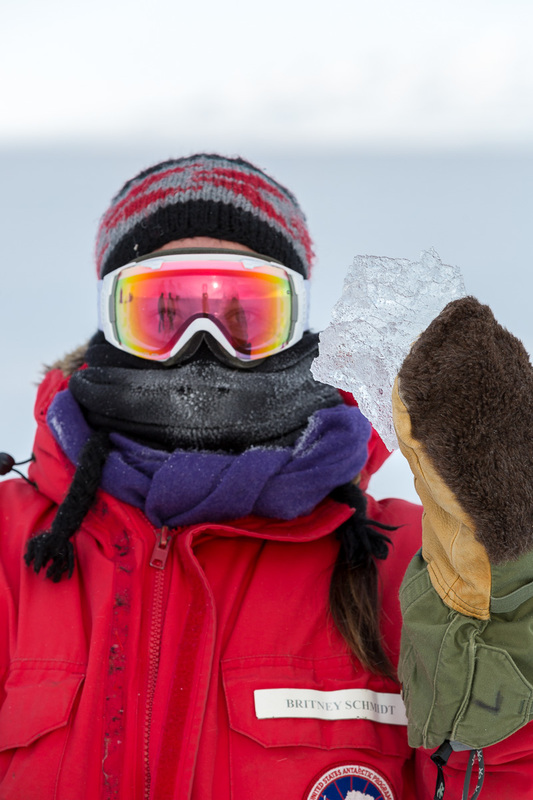
Britney holds a large sea ice platelet that came up during of the Sunfish sea ice access hole. (photo: Peter Kimball)
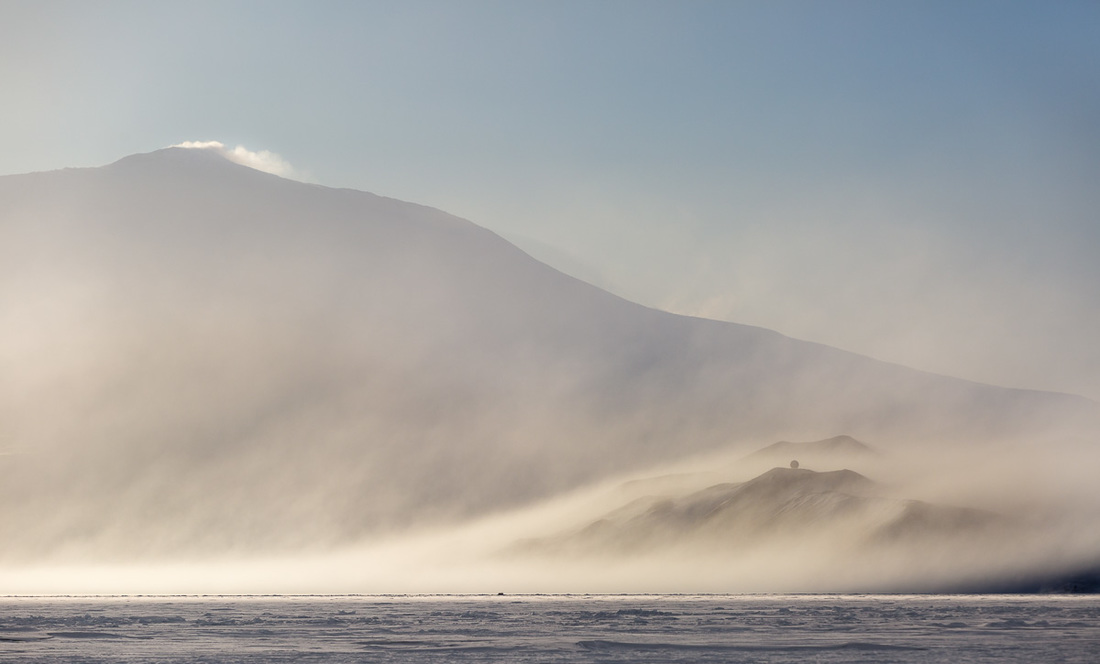
The view back to McMurdo and Mt. Erebus from our site was spectacular as winds swept snow up the slopes of Hut Point Peninsula, and steam rose from the top of Mt. Erebus.
Picture
Winds sweep snow up the slopes of Hut Point Peninsula as we look back to McMurdo from the sea ice. (photo: Peter Kimball)
0 Comments

Observation Hill

9/16/2015

0 Comments

 
By Peter Kimball
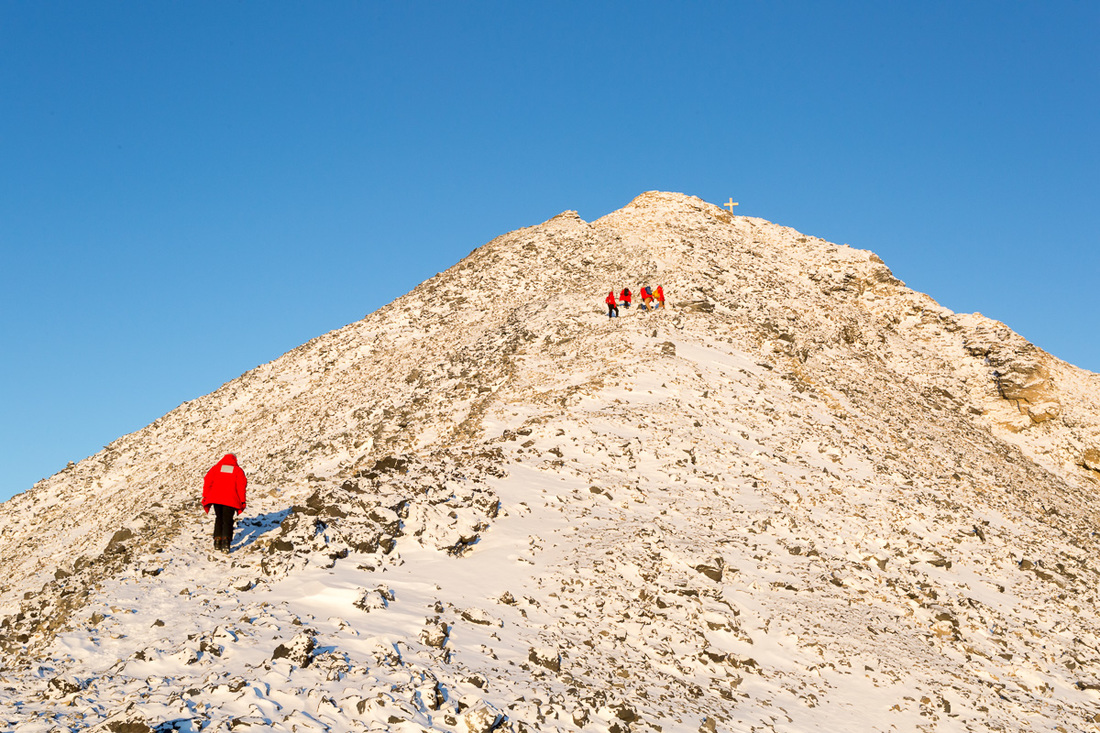
Hiking Observation Hill
Our group hikes up Observation Hill towards Memorial Cross. (photo: Peter Kimball)
After we gave our lab tour this past Sunday, we hiked up Observation Hill at the south end of McMurdo Station.  It was cold, but hiking in our full cold weather gear was a tricky thermal management situation.  The snow will soon begin to melt from the dark volcanic rocks around McMurdo Station, and all of these views will look very different.
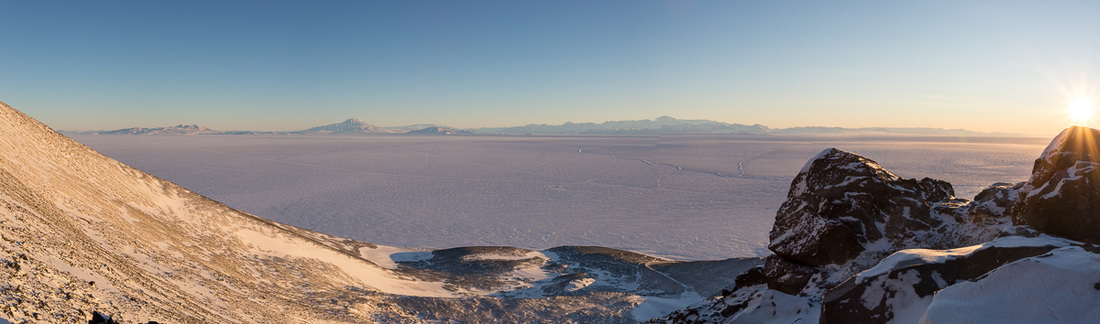
Picture
Sea ice in McMurdo Sound as seen from halfway up Observation Hill. (photo: Peter Kimball)

I spent some time at the top making use of the camera gear I schlepped up.  Here are some views from the top:
0 Comments

More Aurora Australis!

9/15/2015

0 Comments

 
By Peter Kimball
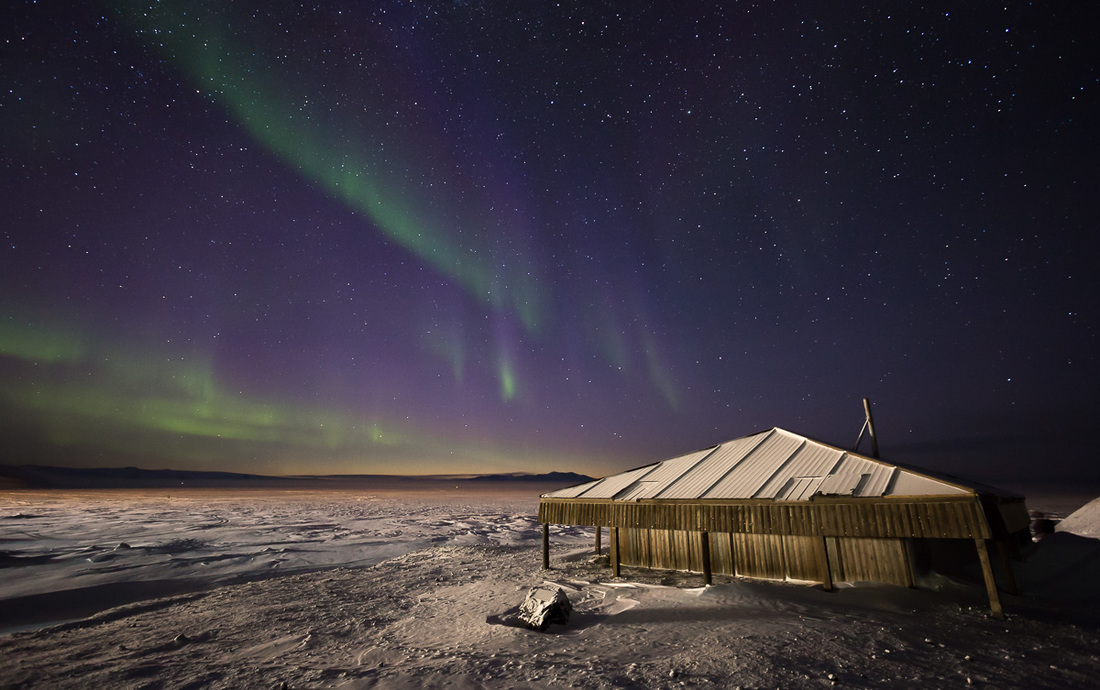
Picture
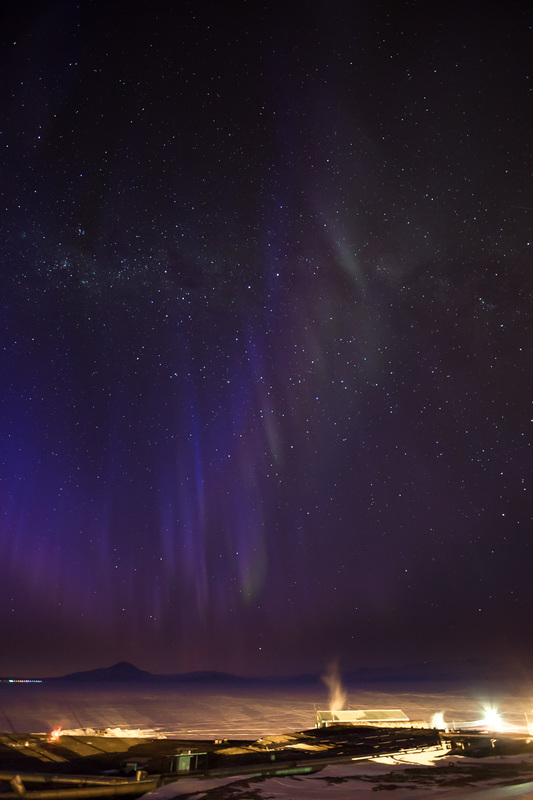
Aurora australis over Discovery Hut and sea ice in McMurdo Sound. (photo: Peter Kimball)
We were smiled upon with ANOTHER aurora event this past Saturday night.  These aurora were just as amazing as the ones we saw last Tuesday night.  A group of us went out to Hut Point and found ourselves giggling and wowing aloud as the beautiful display transpired.  I wondered if I should make ANOTHER aurora post... YES!... and I'll do it again if we're lucky enough to see another display!
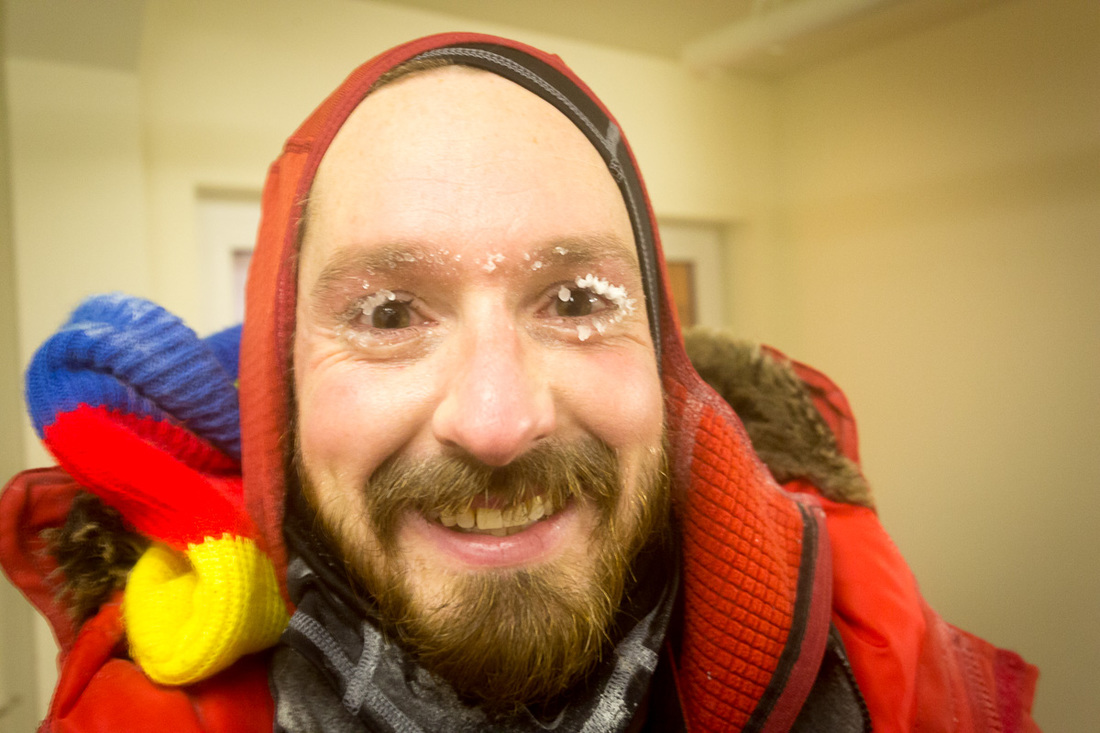
Once again, it was fiercely cold - wind chill below -55 C, according to the NASA building sensors.  Even in our full gear, we were only able to stay outside for about an hour before we had to head in.  Just inside the dorm, I took this picture of Josh in the last moment before my cold camera lens fogged up completely:
Eyelash ice crystals
Josh - even happier than he is cold after viewing the aurora australis. (photo: Peter Kimball)
0 Comments

The Beginnings of Field Site Setup

9/15/2015

0 Comments

 
By Peter Kimball
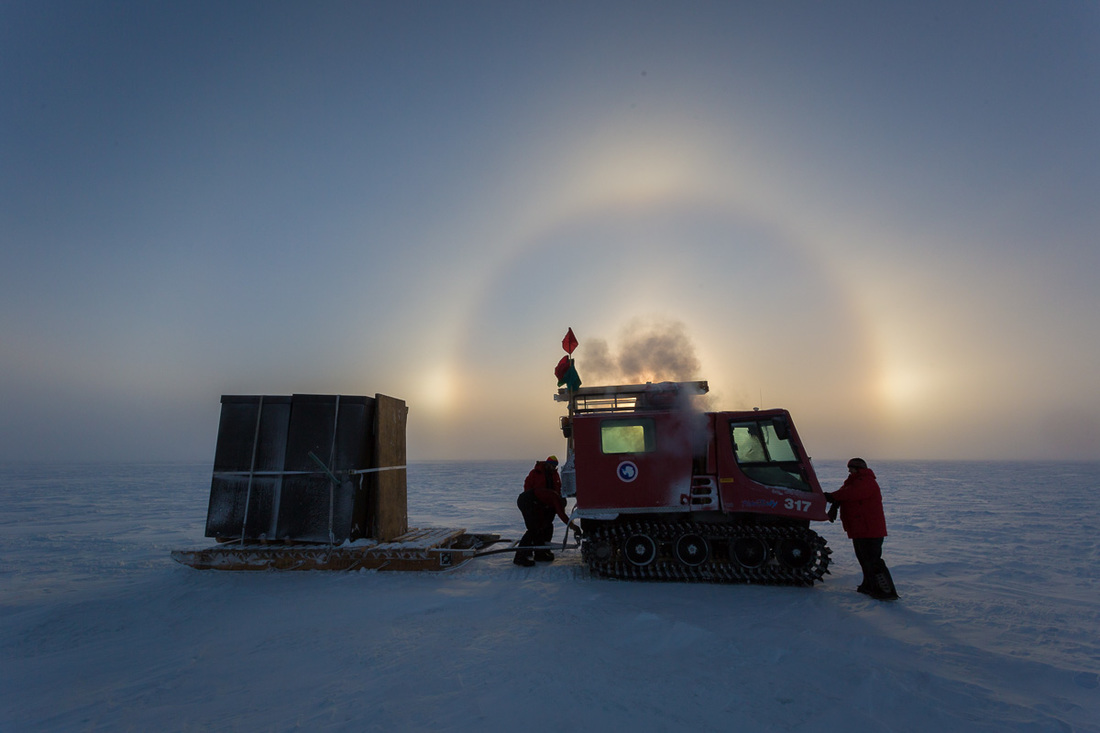
Pisten Bully Sun Dog
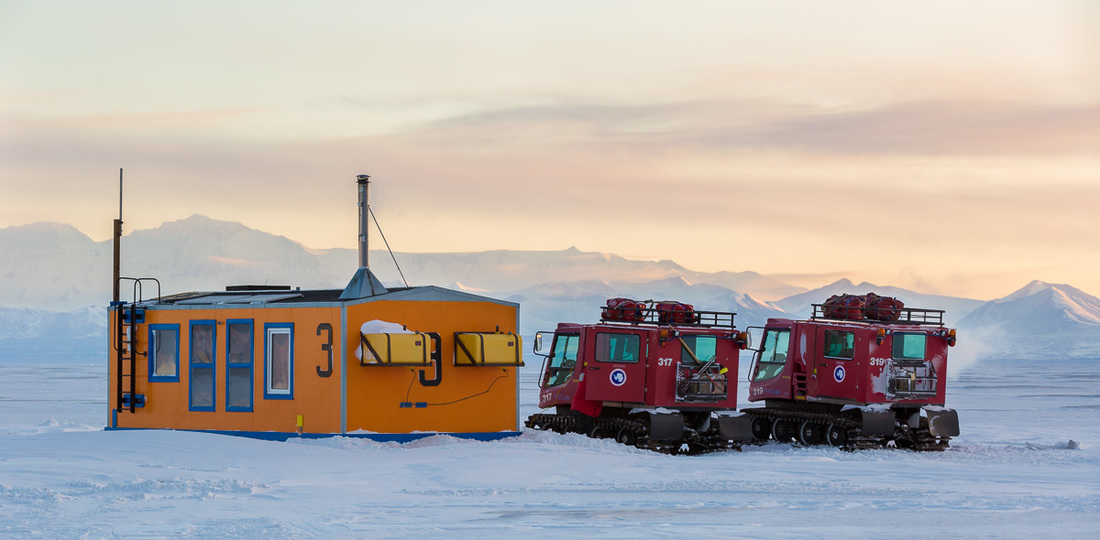
Justin and Josh disconnect our outhouse from our Pisten Bully out at our candidate field site. (photo: Peter Kimball)
A few of us went our to our first-choice candidate field site today.  We'll need to do some exploring under the ice with Sunfish before we can call it our "for sure" field site.  The plan today was to watch the drillers put in a 48" access hole, position a fish hut over the hole, and then deploy Sunfish.  It was quite cold again today, though, and the drill couldn't be started.  So instead, we accomplished a small chore and dragged our outhouse out to the site.  Our expedition's string of amazing natural phenomena continued today with a beautiful sun dog.

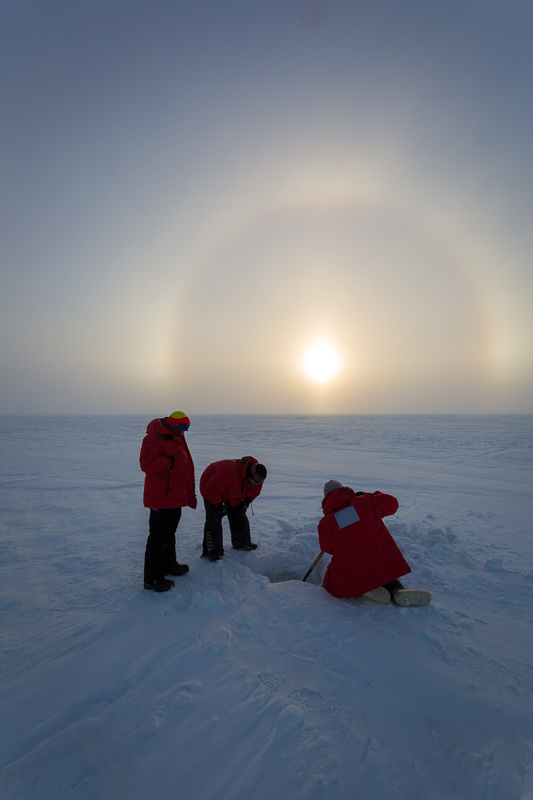
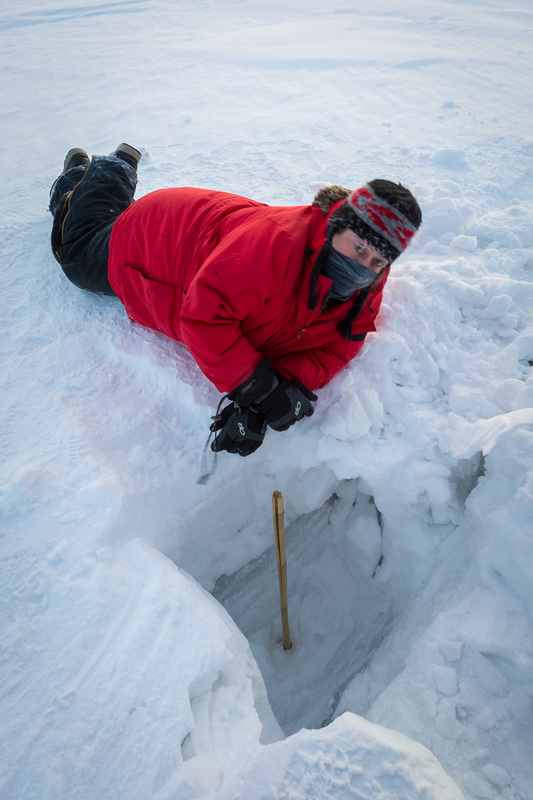
After dropping off the outhouse, we went south of our field site to check on the status of a crack in the ice we saw there during site selection.  It's the tiniest thing on the surface, but it's a bit scary under the snow.  The crack is still small enough to be crossed by our Pisten Bullies, but wouldn't be crossable (at this location) by snow machines.  We'll have to keep an eye on this when we start doing surface tracking of ARTEMIS later in the season.
Picture
Josh, Britney, and I check out a sea ice crack just south of our candidate field site. (photo: Justin Lawrence)
Picture
Britney checks the depth of the crack with a bamboo pole. There's open water under the snow, 38" below the surface. The crack is 32" wide. (photo: Peter Kimball)
0 Comments

Sunday Lab Tours

9/14/2015

0 Comments

 
By Peter Kimball
Picture
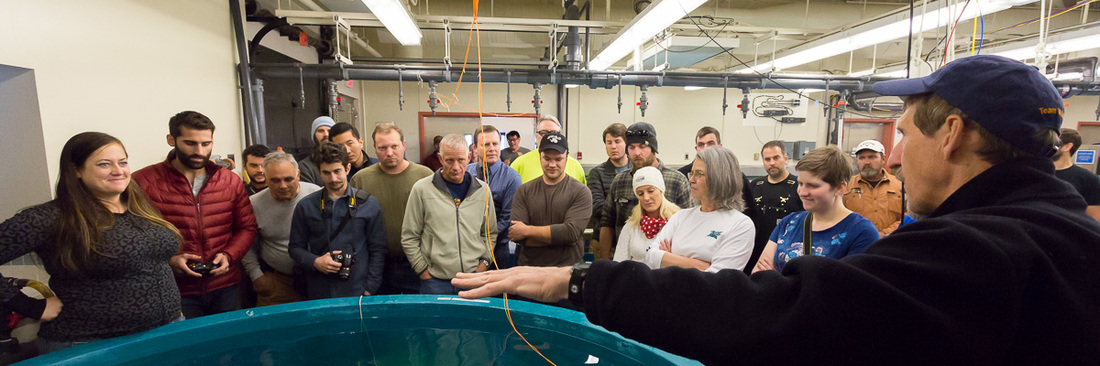
Justin drives Sunfish in the test tank as Bill, Britney, and I explain our robots and science mission to the Sunday Lab Tour group. (photo: Peter Kimball)
McMurdo Station is an amazing place.  It exists to enable scientific research, but it only functions because of the hard work of the people here.  Machinists, cooks, stewards, administrators, instrument technicians, doctors, helicopter crews, waste managers... there's a whole city of people here doing various jobs.  Each Sunday, the Crary Lab building is opened up to anyone in the McMurdo community who wants to come in and learn about the science that the station is enabling.  We had a very satisfying experience sharing our work with folks yesterday - we had an interactive discussion, drove Sunfish around in the test tank (live demo - yikes!), and showed some video from our under-ice tests.  We're looking forward to more Sunday lab tours!
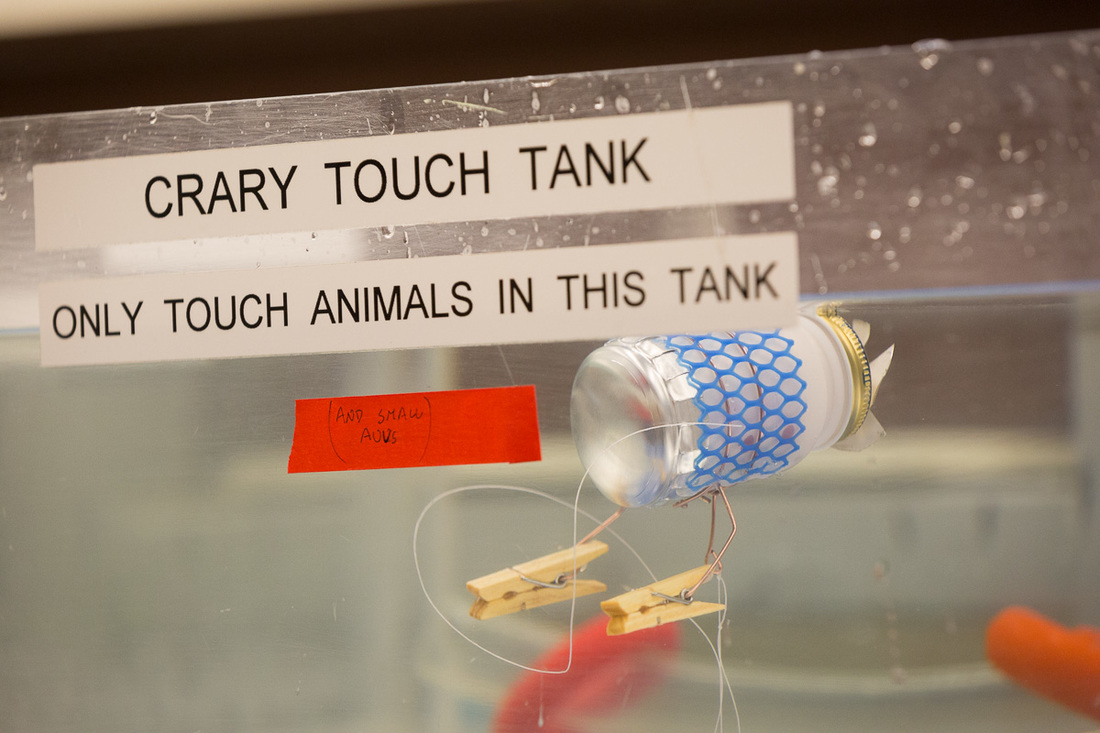
Craft AUV submersible in the touch tank at Crary Lab
David, one of the Crary Lab Assistants, created this submersible at craft night to leave in the touch tank. When more science parties show up, this tank will contain specimens of the animals they're studying. (photo: Peter Kimball)
0 Comments

Meanwhile, in Austin...

9/13/2015

0 Comments

 
By Evan Clark
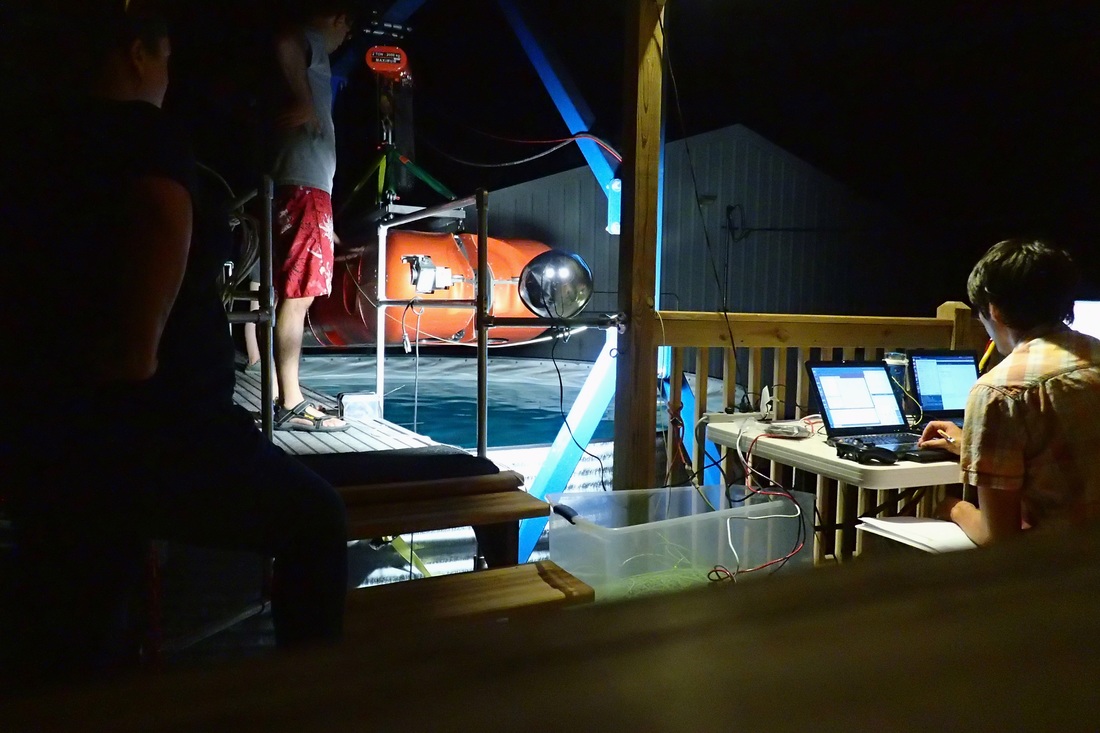
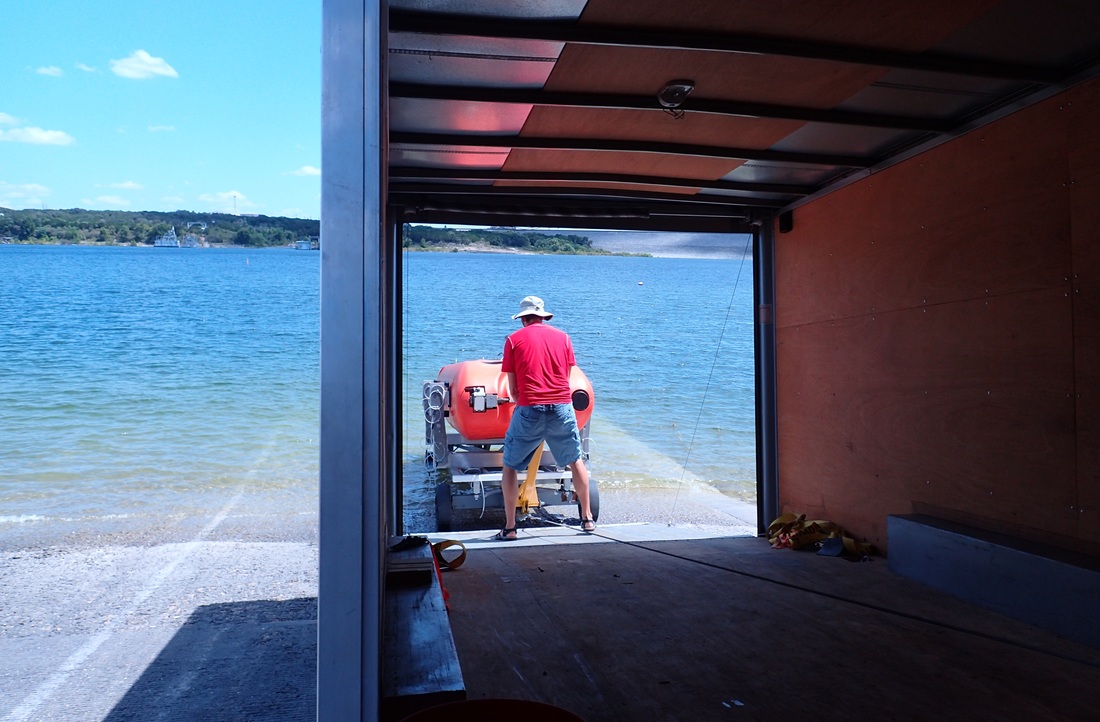
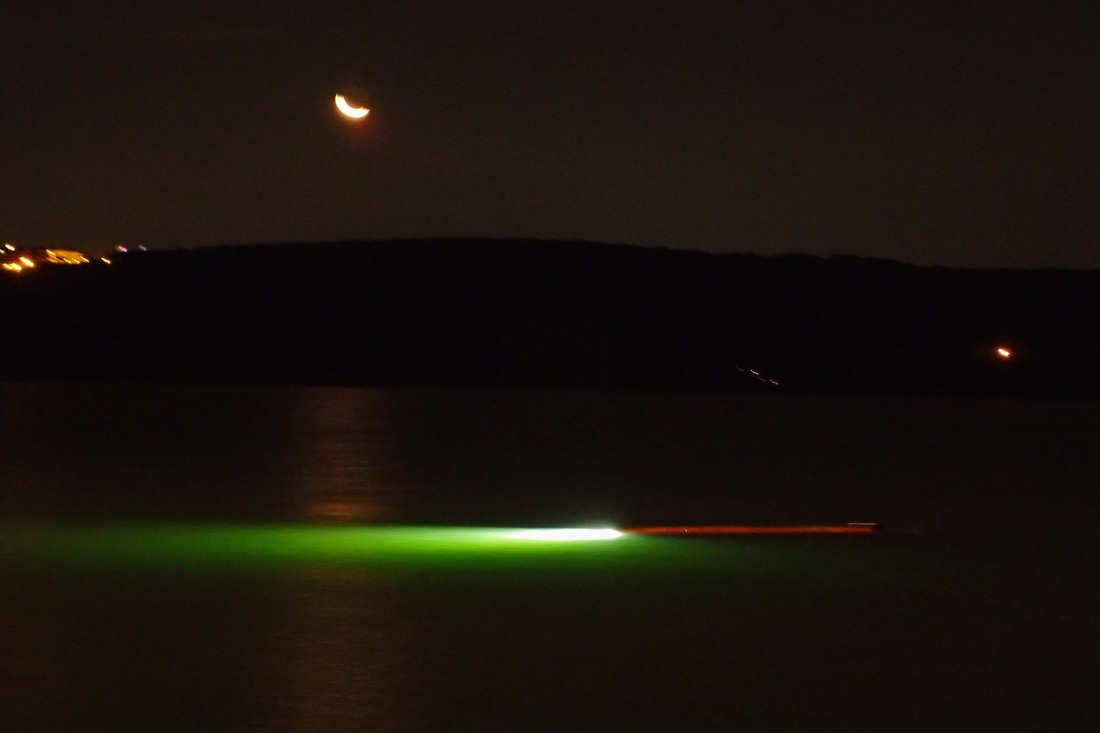
Back at Stone Aerospace headquarters, the remaining members of the ARTEMIS team have been hard at work adding finishing touches and performing final testing with ARTEMIS in preparation for shipping her to Antarctica. We've been verifying newly added instrumentation, tuning control, and improving ARTEMIS's autonomous navigational capabilities. For quick tests, we submerge ARTEMIS in Stone Aerospace's NBF (Neutral Buoyancy Facility - basically a big tank of salt water), and for more in-depth tests, we bring her to Mansfield Dam, which provides us locally with two things we need: enough water depth to maneuver, and a large boat ramp we can use to move ARTEMIS from the trailer to the water.   
Picture
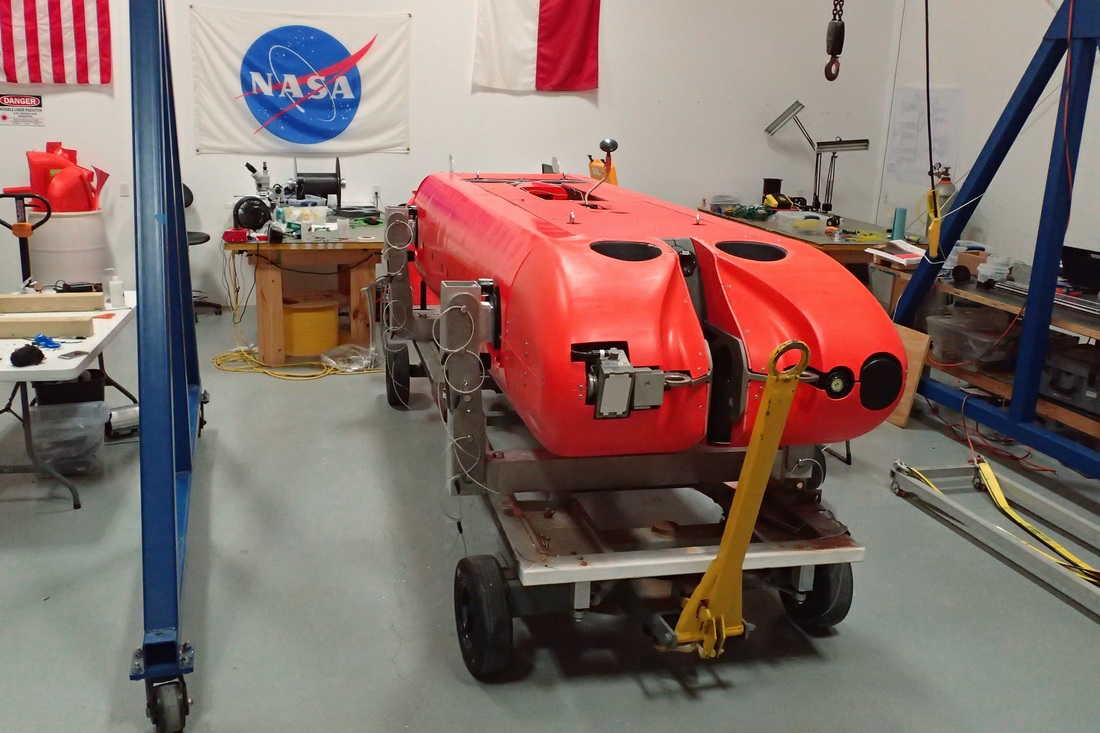
ARTEMIS sits on her transportation cart in lab at Stone Aerospace headquarters. (photo: Evan Clark)
ARTEMIS shipped yesterday (woohoo!) and began her long journey to the ice. ARTEMIS will travel by ground to Port Hueneme, California, and from there she'll catch a ride on an Air Force cargo plane to Antarctica, along with scientific equipment from other US Antarctic Program projects. Assuming the weather cooperates, ARTEMIS will arrive at McMurdo near the start of October - about the same time as the first wave of the MainBody team (Kristof, Evan, and Brian). The second wave (Mark, Keith), will join us near the end of October and relieve some members of the WinFly team.  
Picture
ARTEMIS undergoes testing at the Stone Aerospace Neutral Buoyancy Facility in early August. (photo: Evan Clark)
Picture
Kristof maneuvers ARTEMIS out of the trailer and into the water in preparation for lake testing. Once ARTEMIS's weight is held up by buoyant force, the arms on the transportation cart are swiveled away, and she can float free. (photo: Evan Clark)
The WinFly team has been working tirelessly to select a field site for ARTEMIS from several candidate sites on the sea ice near McMurdo Station, and make sure all the logistics are in place to receive the robot once she arrives. They have been scouting the field sites using the Sunfish AUV, as well as a small ROV donated by OpenROV for the expedition (thanks OpenROV!). They hope to gather data on local currents, formation of platelet ice and brash ice (nasty refreezing effects near the ice ceiling which could create features for ARTEMIS's fiber optic tether to snag on), and ease of access to our scientific targets under the McMurdo Ice Shelf. Once a field site is selected, they will construct the Bot House (a heated mission control structure with a moon pool through which to deploy ARTEMIS), set up our camp on the ice, and prepare for ARTEMIS's imminent arrival. 

She's on her way, cross your fingers for safe travel!
Picture
ARTEMIS performs a transect during lake testing at Mansfield Dam over Labor Day weekend. We found it easier to perform testing at night to avoid all the holiday boat traffic! (photo: Evan Clark)
0 Comments

The Size of Antarctica

9/13/2015

1 Comment

 
By Peter Kimball
Picture
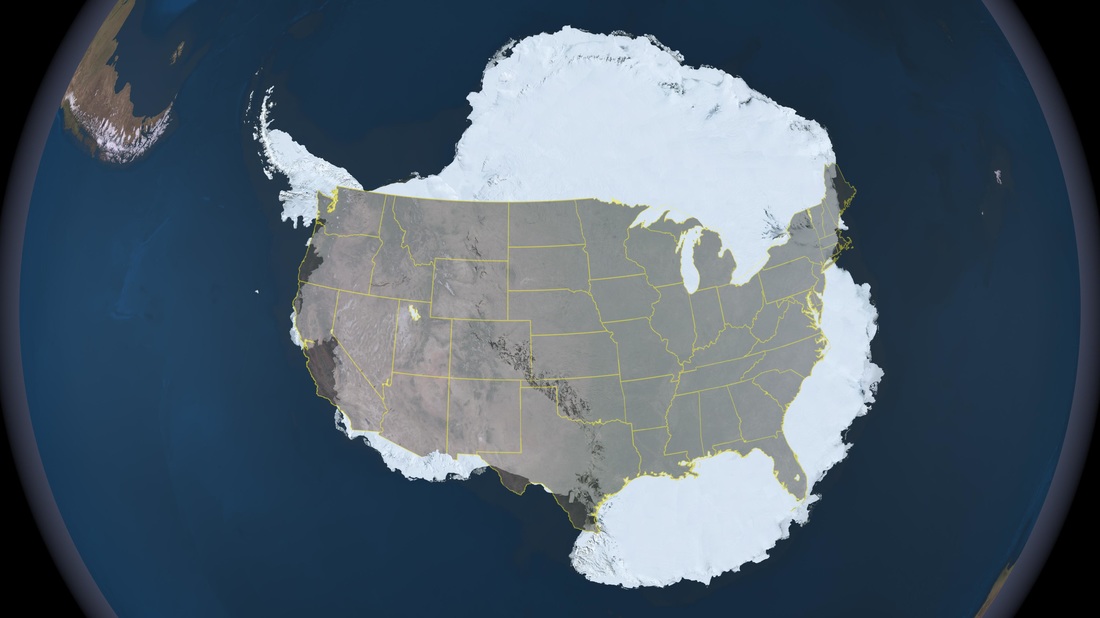
Antarctica with the US overlaid for size comparison. (image: nasa.gov)
This is a very cool image from a NASA site.  Fun fact: they way they've overlaid the US, McMurdo Station is very close to Austin, TX - Stone Aerospace Headquarters.
1 Comment

Aurora Australis

9/11/2015

3 Comments

 
By Peter Kimball
Yesterday was already unbelievably wonderful due to our Sunfish tests under ice.  But it got even better...  I got back to the dorm at about 11:30 pm (after blogging!), and Justin informed me that aurora were visible outside.  I was super tired, but as I mentioned in my camera gear post, this is a play-to-win situation, so I grabbed my tripod from the dorm, went back to lab for my camera, and wandered around outside with my jaw hanging open until about 1am when the cold started getting to me.  So, I'm a bit short on sleep today, but the display last night was amazing!
Picture
Aurora australis over Mt. Discovery and the Pegasus runway lights. (photo: Peter Kimball)
Picture
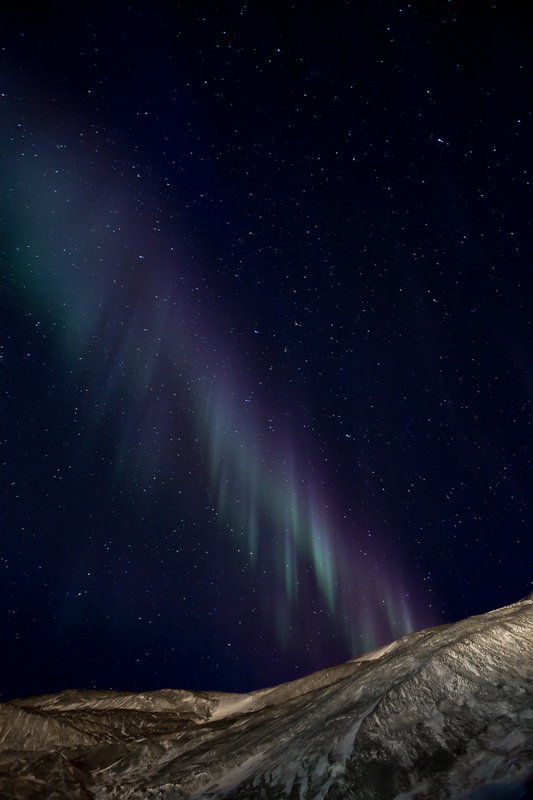
Aurora australis over the hills north of McMurdo Station. (photo: Peter Kimball)
Here are a few more shots from last night's aurora display.
3 Comments

Sunfish Under Ice!

9/10/2015

2 Comments

 
By Peter Kimball
Josh and Vickie clearing ice from the drill hole
Josh and Vickie clear ice from the drill hole in preparation to launch Sunfish. (photo: Peter Kimball)
Today was a great day.  Sunfish completed her first ever dives under ice.  We drove out on the sea ice in our Pisten Bullies to a fish hut loaned to us for the day by another science group.  After setting up our computers and safety rigging, we went through our startup checklist and deployed Sunfish into the hole.  The first test was to pull Sunfish right back out again.  Once we were certain about our ability to recover Sunfish, we sent her back down the drill hole and drove her out under the ice...

The ice is about 2 m thick at this location, so I was surprised to see how much sunlight makes it through to the water.  The drifting snow, our hut, and our vehicles all make shadow patterns on the ceiling overhead.  In the water, we performed several tests of specific subsystems, and generated a list of things we'd like to improve or implement for our next test.  Here are some screen-grabs from Sunfish's live camera view during today's glorious first ever dives under ice:
We arrived in the morning to find that the heater in the hut had broken.  Normally, the heater is left on to keep the ice hole from refreezing.  Without the heater working, the temperature in the hut was the same as outside: -30 F.  However, some local seals had kept the hole open all night.  Two seals continued to use the hole for breathing throughout our operations today.  Protocol when seals show up in the hut is to stop operations and allow them to breathe.  Depending on what they're up to, their breathing can last 5 - 15 minutes.  If they show up with a fish and set up shop to eat, it can take much longer before they leave and allow work to resume.  Our visitors today only stayed for about 5 minutes at a time.  It was really special to see these seals up close in their antarctic home.
The weather was a bit nasty when we left town this morning, but by the time we finished up at the fish hut in the afternoon, things had improved quite a bit.  Some carpenters from town even came out and fixed the heater in the fish hut.  This was the scene just before we packed up for the day:
Picture
Our Pisten Bullies sit beside our borrowed fish hut on sea ice in McMurdo Sound. (photo: Peter Kimball)
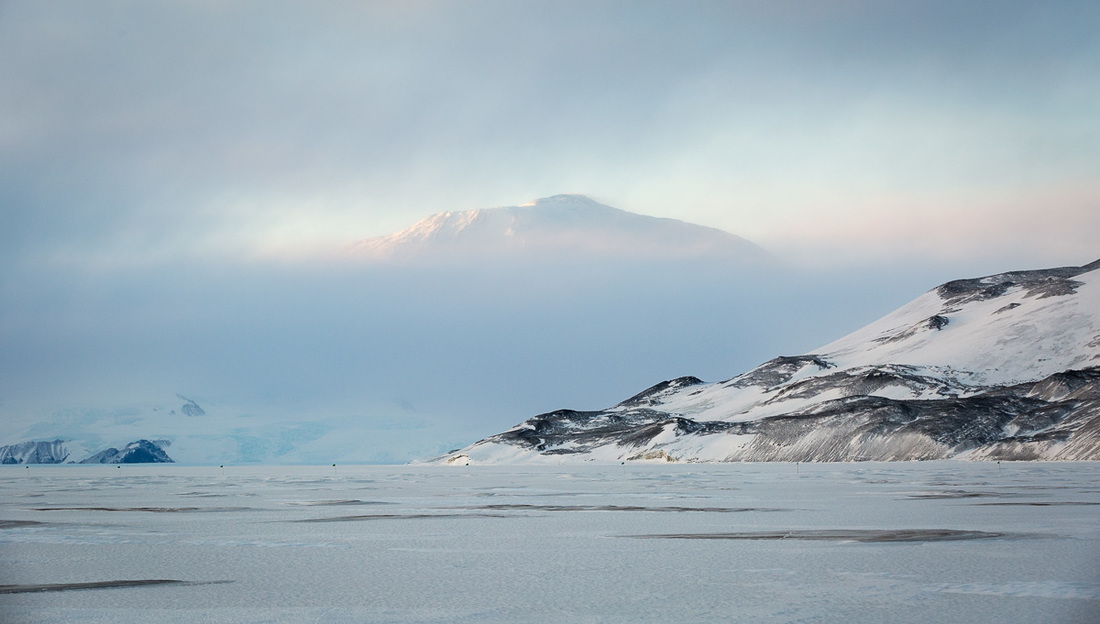
We drove happily back to town after our wonderful day at the fish hut.  Driving the Pisten Bullies is super fun, and I got to drive one back to town this evening.  Mt Erebus emerged from behind low clouds as we rolled toward town - a beautiful finale to a great day on the ice.
Mt Erebus with McMurdo Sound Sea Ice and Hut Point Peninsula.
Mt Erebus emerges into view with Hut Point Peninsula and McMurdo Sound sea ice in the foreground. Small green flags mark a USAP sea ice route. (photo: Peter Kimball)
2 Comments

Thwarted

9/9/2015

1 Comment

 
By Peter Kimball
We ballasted the Sunfish vehicle in a small tank in our lab yesterday.  The tank is filled with water circulated into the lab from McMurdo sound, so the salinity (and vehicle buoyancy) should match what we'll see in the field.  This also means that the water temperature is around 31 F, and it is not pleasant to touch.

Some fellow researchers at McMurdo have a fish hut set up down on the sea ice where they collect invertebrate marine life through a drill hole.  The hut protects the hole against refreezing and also shelters the work area around the hole.  They offered that we could use the hut yesterday around 4 pm when they were finished for the day.  Very nice!  So, we packed up all our gear in the afternoon and planned to head out to the hut.

However, by the time we were leaving the station, things didn't feel right.  We were rushing, the wind was howling, and visibility was not good.  The weather folks were in training all day, so we didn't have a confident weather prediction.  This did not feel like the right set of conditions for our first test of Sunfish under ice.  So, at the edge of town, we made the smart call and turned back.

The hut is available to us again today.  Currently, the temperature is -32 F.  The wind is 17 mph, gusting to 32 mph.  This time, we've got the whole day, and the forecast is for the wind to come down as the day goes on.  We'll pack up this morning and try again to get Sunfish under the sea ice.
1 Comment

Sea Ice Training & Site Reconnaissance

9/8/2015

2 Comments

 
By Peter Kimball
We went out on the sea ice for the first time yesterday.  We went with Alasdair, a USAP sea ice expert, to learn about safety (especially vehicle safety) around sea ice cracks.
After learning about ice crack safety, we proceeded South across the sea ice to the edge of the McMurdo Ice Shelf and began looking at potential sites for our main field camp.  We want to find a site on the sea ice that's close to scientifically interesting sections of the ice shelf (there are many factors), and near a place that our vehicle tracking team can get up onto the shelf safely with minimal detour.
Our vehicles performed well on the sea ice despite the cold.
We learned over the radio that the air temperature out on the ice was -41 F!  Fun fact:  -40 C and -40 F are the same temperature.
We had a beautiful day out on the sea ice, including views like this one back toward the station.
Picture
A view of McMurdo Station with Mt. Erebus and Mt. Terror in the distant background. (photo: Peter Kimball)
2 Comments

While We Still Have Darkness

9/8/2015

3 Comments

 
By Peter Kimball
Vince's Cross with faint aurora
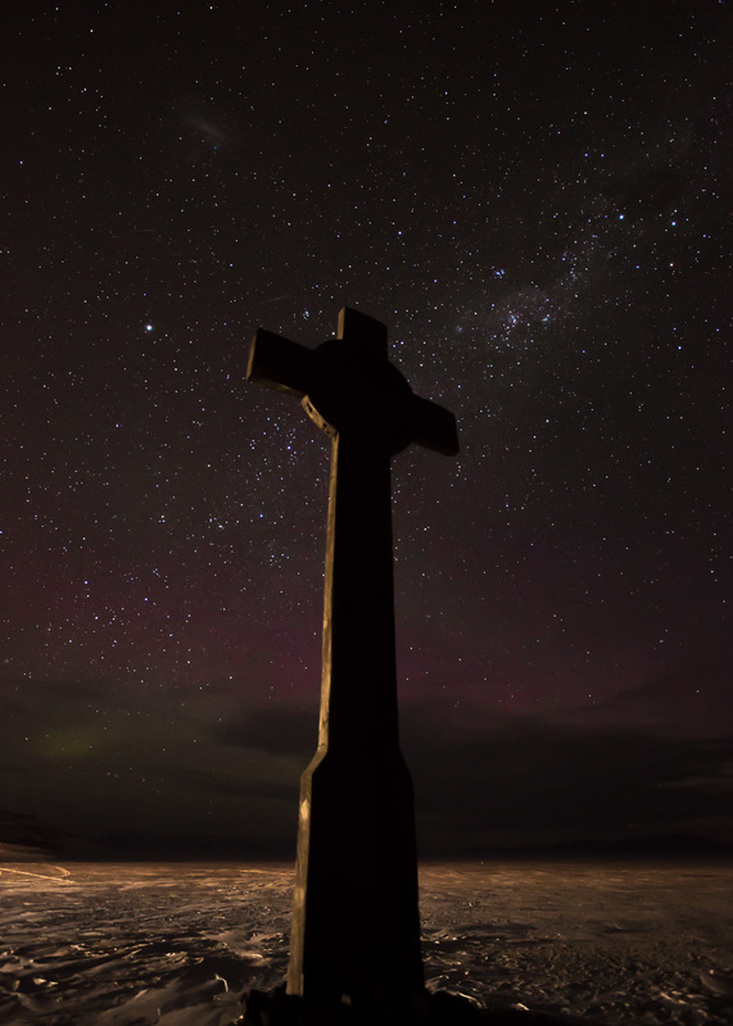
Vince's Cross, sea ice lit by McMurdo Station, and faint aurora australis. Vince's Cross is made of oak, and was erected by Scott's first expedition in March 1902, in remembrance of the death of Seaman George T. Vince who slipped off of a cliff and drowned while trying to return to the ship during a blizzard. Vince was the first person to die in McMurdo Sound. (photo: Peter Kimball)
Today (Sunday) is a day off.  So, we worked late after dinner last night, and then Justin and I headed out on foot to Discovery Hut.  Our goal was to escape the lights of McMurdo station and photograph the antarctic night sky while we still have darkness.  This mission was an unequivocal success.  We were rewarded with very clear skies, milky way like I've never seen, and even some faint auroras.

It was -23 C while we were out.  We fared well, but I did sustain a small injury:  a cold burn on the tip of my nose from touching it to the LCD screen on the back of my camera after my breath had condensed there.  The wind came up about an hour in.  We lasted only another 10 minutes before we had to retreat to the station.  Here are some more shots from the evening:
3 Comments

The View From Our Lab

9/6/2015

0 Comments

 
By Peter Kimball
View across sea ice to mountain range.
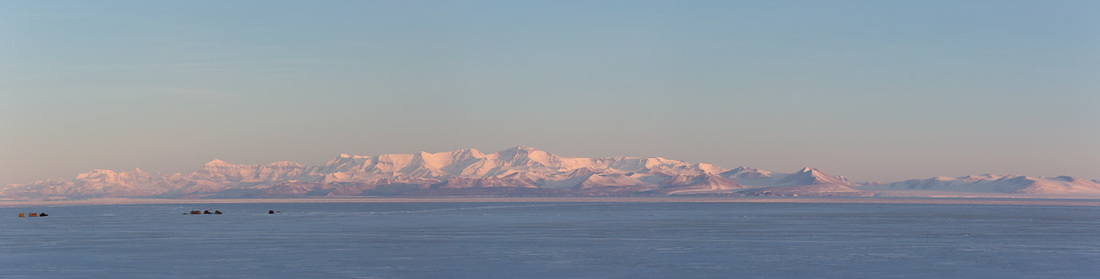
The view from our lab window. USAP field safety folks are out on the sea ice setting up huts for other science groups. Our field camp will be further away and off the left side of this image - as close as possible to the ice shelf. (photo: Peter Kimball)
I just wanted to share the view from our lab window.  At this time of year, each day is basically an 8-hour sunrise, followed by an 8-hour sunset.  These mountains are lit with beautiful pastel light all day, but the lighting angle changes as the sun swings around behind us.  This picture was taken at about 11:30am.  It was -25 F outside.  

We walk to dinner at very nearly the same time each evening, so it's easy to notice the lengthening days.  True darkness is becoming more brief each night.  At the same time, the C-17 landing was the last time I've felt direct sunlight (the station sits on the southern slope of Ross Island).

Meanwhile, we've been hard at work preparing the Sunfish vehicle to get wet and completing more required trainings (yesterday included Radio Communications, Waste Management, and GPS).  We're very excited for today's training:  Working On Sea Ice!
0 Comments

Unpacking Our Gear

9/5/2015

4 Comments

 
By Peter Kimball
Picture
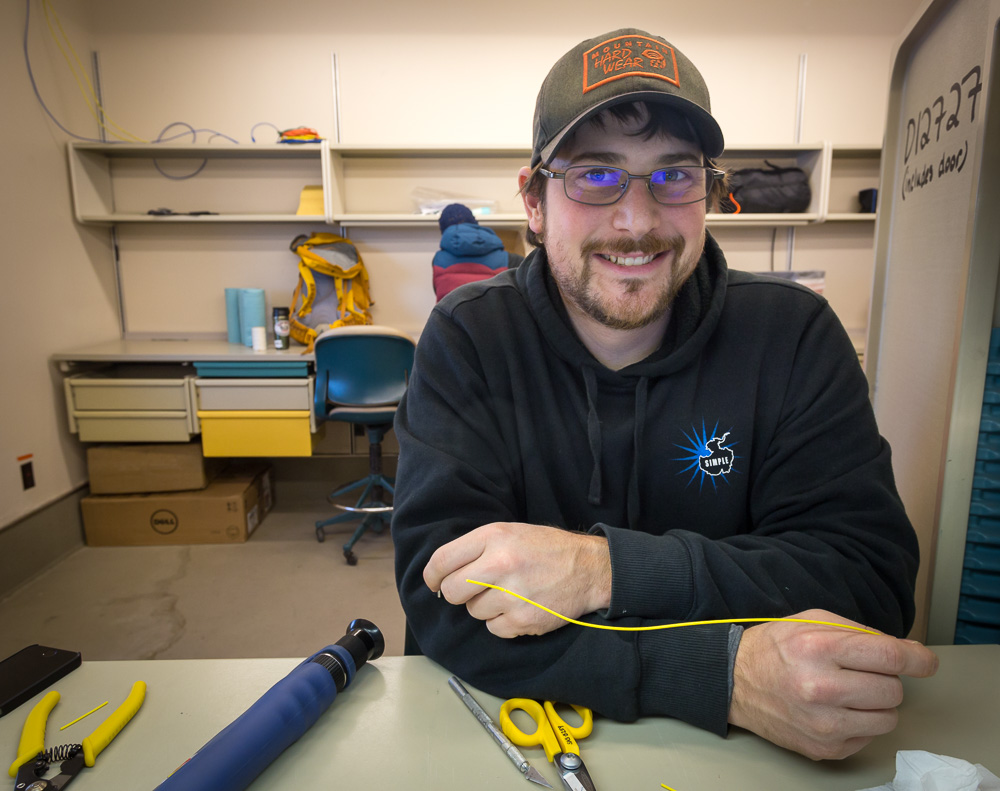
John checks out our optical fiber termination gear. (photo: Peter Kimball)
Yesterday, we took delivery of our gear to our lab space in the Crary Lab building.  Today, we've been checking basic system functions on the Sunfish robot and preparing for deployment.  Our gear seems to have survived the shipping process very nicely, although Chris did have to re-crimp one power connector... not bad.
4 Comments

Pisten Bully Training

9/5/2015

0 Comments

 
By Peter Kimball
Picture
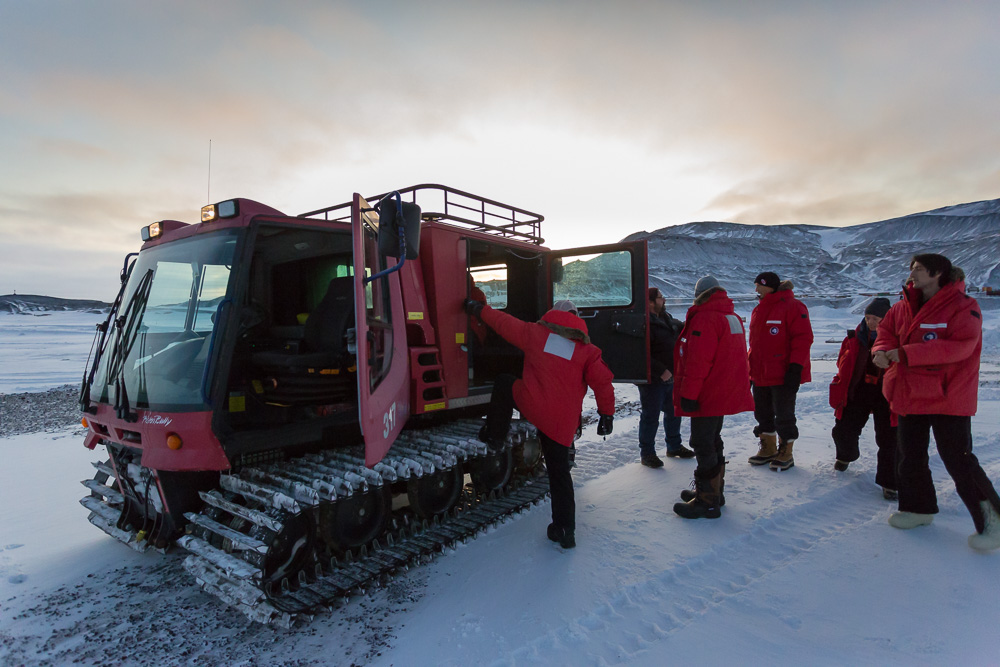
Our group climbs back into a Pisten Bully to resume training. Chris prepares to replace me as driver. We had stopped to look at the sea ice access road we'll eventually be using. (photo Peter Kimball)
We had Pisten Bully training on Monday.  "Pisten" translates from German as "slopes" - these beastly little tracked vehicles are commonly used for cat skiing & ski area maintenance.  A diesel engine drives a hydraulic motor that actually drives the tracks.  Top speed on a "PB" in ideal conditions is about 16 mph, although the speed limit is 5 mph on-station.  We each drove a Pisten Bully as part of our training on Monday and unanimously concluded that they're highly enjoyable to drive.

Our group is assigned two Pisten Bullies for accessing candidate field sites during winfly, so we'll get to know these machines very well.
0 Comments
<<Previous
    SIMPLE project logo
    ARTEMIS project logo
    Stone Aerospace Logo
    ARTEMIS is part of the SIMPLE project, supported by NASA ASTEP.

    About the Blog

    This is the personal blog of Peter Kimball and Evan Clark, following our deployment with the ARTEMIS long-range underwater robotic vehicle to explore beneath the McMurdo Ice Shelf in Antarctica.

    Authors

    Peter Kimball
    Peter Kimball is an aerospace engineer and field roboticist on the Stone Aerospace ARTEMIS project.
    Evan Clark
    Evan Clark is a computer scientist and field roboticist on the Stone Aerospace ARTEMIS project.
    Picture
    Kristof Richmond is a mechanical engineer and field roboticist on the Stone Aerospace ARTEMIS project.

    Archives

    January 2017
    December 2015
    November 2015
    October 2015
    September 2015
    August 2015

    RSS Feed